 Loading... Please wait...


Recent Posts
Tips For Puppy Training-Part 2
Posted on
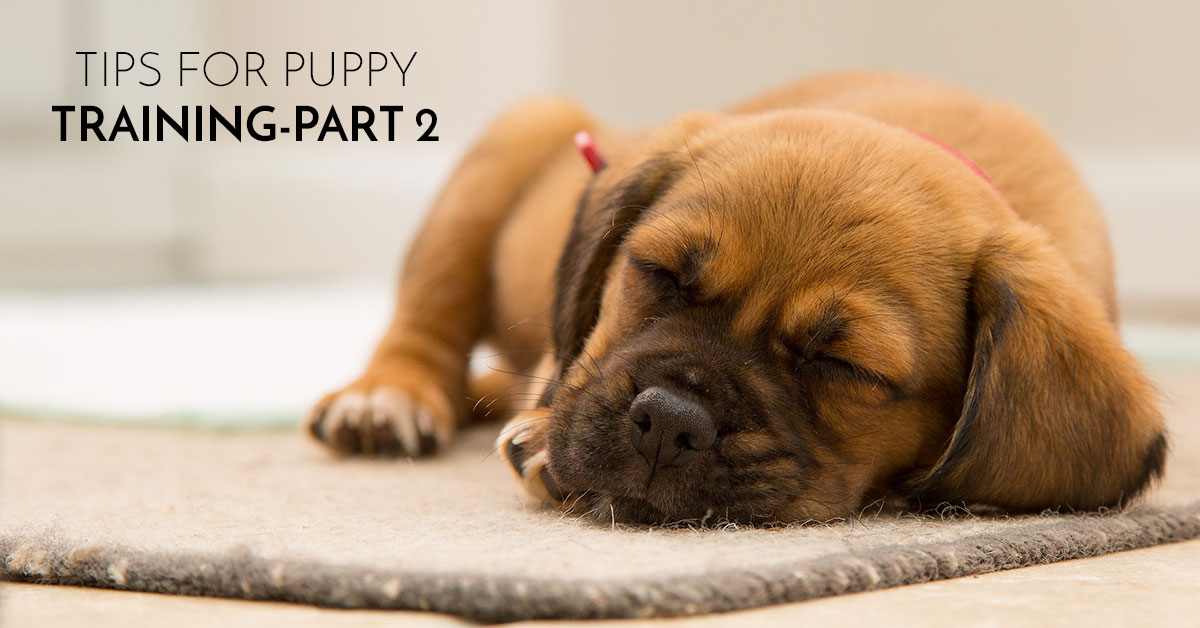
Let’s say you’re going to be adopting a puppy. Pretty cool, right? You bought puppy pads, collar and leash, everything you need. But in your head, you can see 2 potential outcomes with your puppy. The first is a dog that’s a perfect canine citizen. She’s friendly, listens to commands, never makes a mess. The second is a nightmare on 4 legs. She jumps on everyone, barks hysterically, and conveniently forgets her name when you’re calling her.
Nobody wants a bad dog and, truthfully, there are very, very few truly bad dogs. However, there are definitely bad owners, and it’s mostly due to inattention and inconsistency. A poorly trained dog can annoy your neighbors, get you fined by your town, and raise your stress through the roof. Yesterday, we shared a few training tips to help you and your dog learn a little more efficiently. Today, we’d like to share a few more.
- If you’re bringing your puppy home Friday night, don’t expect him to be completely trained by Sunday afternoon. Training takes time, and it’s important to have realistic expectations. Plus, some canine behaviors like jumping, digging, and barking, can take a while to curb, since your dog regards those behaviors as normal. Have a little bit of patience with both your puppy and yourself, and remember that he’ll get there.
- A dog that’s healthy is a dog that’s happy and ready to learn. That’s why it’s important to feed your puppy high-quality dog food. Protein is important, but not all dog foods have the same amounts of protein. A miniature poodle that hangs out all day in your condo shouldn’t have the same diet as an athletic border collie who herds sheep. Ask your vet what the right kind of food is for your puppy’s diet.
- If you’re seeing your puppy do something you don’t like, there’s a good chance the behavior has been reinforced somewhere previously. For example, let’s say your puppy brings you a toy and wants to play fetch. You don’t do anything. She barks, so you sigh and start playing with her. You’ve just taught her that when she barks, you’ll do what she wants. In a situation like that, either ignore the barking completely, or make her sit first, then start playing.
- Some people aren’t crazy about using treats as a training aid, since they view it as bribery. We get it, but the truth is, do what works for you and your dog. Just remember that you’re not only training your puppy during sessions. Every interaction is a chance to either teach her something new or reinforce good behavior. You can do that with treats, love and petting, walks, and fun games. Make sure that good behavior from your puppy earns her a treat, instead of the other way around.
- One of the most widespread mistakes puppy owners make is giving their dog too much freedom too quickly. When this happen, you can run into problems like destructive chewing and housebreaking issues. Instead, keep your puppy on leash initially. Close off rooms that she’s not ready to go into, and put her in a crate for unsupervised time. Good behavior earns her more access to more places, and more freedom.