 Loading... Please wait...


Recent Posts
Tips for Puppy Training
Posted on
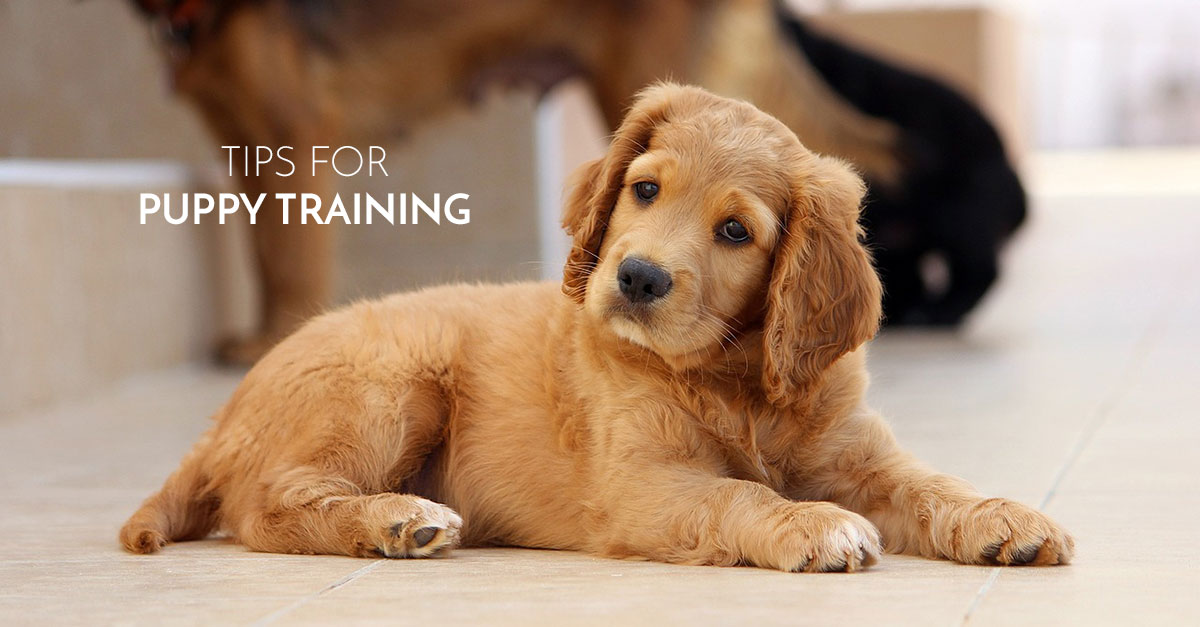
There aren’t many experiences in the world better than bringing a new puppy home. The good news is, you’re adding to your family, saving a life, and you get to hang out with a puppy. The bad news is, there’s an excellent chance that you’ll be cleaning up stains from accidents and doing damage control on everything your puppy decides is a fun chew toy. You’ll need to buy supplies like a bed, bowls, puppy pads, a leash, the list goes on.
For some people, the idea of training a puppy fills them with dread. But teaching your new family member to be a responsible canine citizen doesn’t have to be an endurance test. In fact, not only can it be fun, but it gives you a great opportunity to establish a lifelong bond with your pooch. Read on for a few helpful tips to keep your puppy happy, healthy, and learning as they grow.
- While your puppy can’t speak, she can communicate with you. The trick is to listen to what she’s saying. Keep an eye on your pup’s body language. If she’s meeting another dog or person, and she’s hiding behind you or exhibiting other signs of nervousness, respect that. Never force a dog into an uncomfortable situation, because down the line, problems can absolutely pop up.
- For some people, it’s easy to enforce discipline with their dog. But be sure that you never get stingy when it comes to affection. When your puppy does the right thing, or even does something close to the right thing, positive reinforcement is the name of the game. Lots of petting, telling him he’s a good boy, and don’t be afraid to go a little over the top sometimes.
- Lots of us assume that, when it comes to treats, puppies will just vacuum anything that’s put in front of them. But like people, puppies can have their own preferences. Some of them can be as finicky as cats! Most puppies tend to like the soft and chewy treats over the ones that are hard and crunchy. But try a few different varieties to get an idea of what the like. For the treats they are less crazy about, you can always put a few in with their regular food to gradually use them up.
- Dogs don’t always do well when they hear the word “no.” It’s not that they want to be disobedient, it’s that they might not understand what you want them to do. If your puppy jumps on visitors, saying “no” might make her think you want her to bark as well or jump from a different angle. Instead, be very clear what you want. If your dog is jumping, tell her to lie down or sit instead.
- Probably the biggest roadblock when it comes to training is consistency. If your puppy jumps on the bed, and you say “no,” another family member calls her up, and a third ignores her completely, she’ll have no idea what to think. Make sure everyone in the household is part of the plan and doing the same things. Better yet, make sure everyone is using the same verbiage. If she only hears “leave it” when she’s thinking about chewing on something she shouldn’t, she’ll get the idea much faster.